


 Alex Rommal
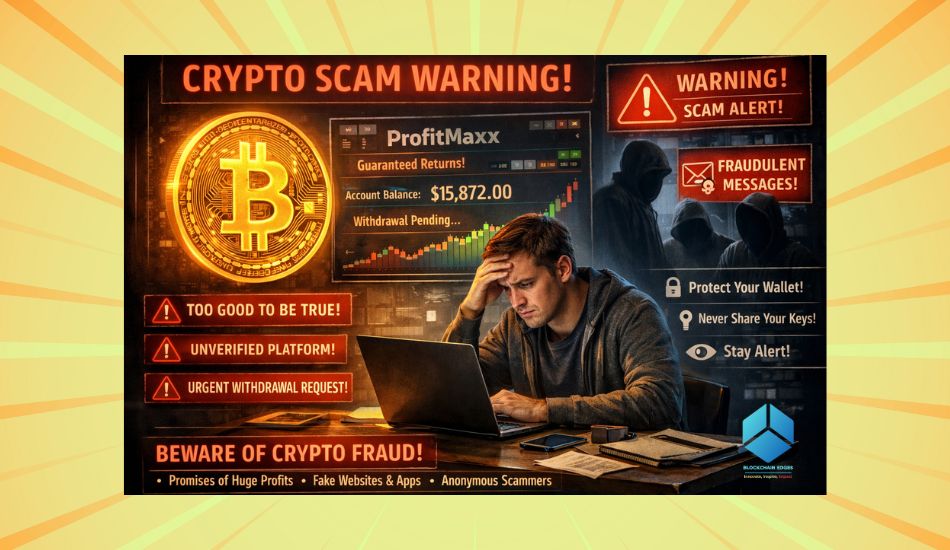
 How To Avoid Crypto Scams: Someone I know, a smart, careful person, lost $11,000 in a crypto scam last year.
It did not happen because they were careless. It happened because the scam was designed to look exactly like something real. The website had a professional logo. The support team responded within minutes. The “investment account” showed steady profits for three weeks before the platform disappeared overnight.
By the time they tried to withdraw, there was nothing left to withdraw.
That story is not rare. The FBI reported $11.36 billion in crypto scam losses in 2025, up 22% year-over-year, and complaints surged to over 181,000. These are not all gullible people. They are nurses, teachers, retirees, and developers, people who simply did not know what to look for.
This guide is about changing that. I am going to show you the 10 most reliable red flags that every beginner should know. Each one is drawn from real patterns used by real scammers right now. Learn them, and you will be ahead of the overwhelming majority of people entering crypto for the first time.

How Fake Crypto Platforms Trick Beginners Into Losing Money?
You can lose years of savings in crypto in less than five minutes.
Not because you are careless. Not because you are stupid. But because modern crypto scams are built to look real. Very real.
A fake investment app can look more professional than a real bank website. A scammer can sound more helpful than actual customer support. In 2026, AI deepfakes, cloned exchanges, and fake trading platforms are fooling beginners and experienced investors every single day.
One wrong click. One fake wallet connection. One message from the wrong person.
That is all it takes.
Right now, thousands of people are searching for ways to buy Bitcoin, trade on Coinbase or Binance, and invest safely in crypto. But many beginners enter the market without knowing how dangerous fake exchanges, phishing links, romance scams, and wallet theft can become.
And scammers know that.
They use urgency, fake profits, emotional trust, and fear of missing out to trick people into sending crypto that can never be recovered. Unlike a bank transfer, blockchain transactions usually cannot be reversed once your funds are gone.
That is why learning the warning signs matters before you invest your first dollar.
In this guide, you will discover the 10 biggest crypto scam red flags beginners must know right now. You will learn how scammers operate, how fake crypto platforms manipulate victims, and how to protect your wallet, identity, and investments before it is too late.
Because in crypto, staying safe is not only about making money.
It is about keeping it.
Why Crypto Scams Work So Well?
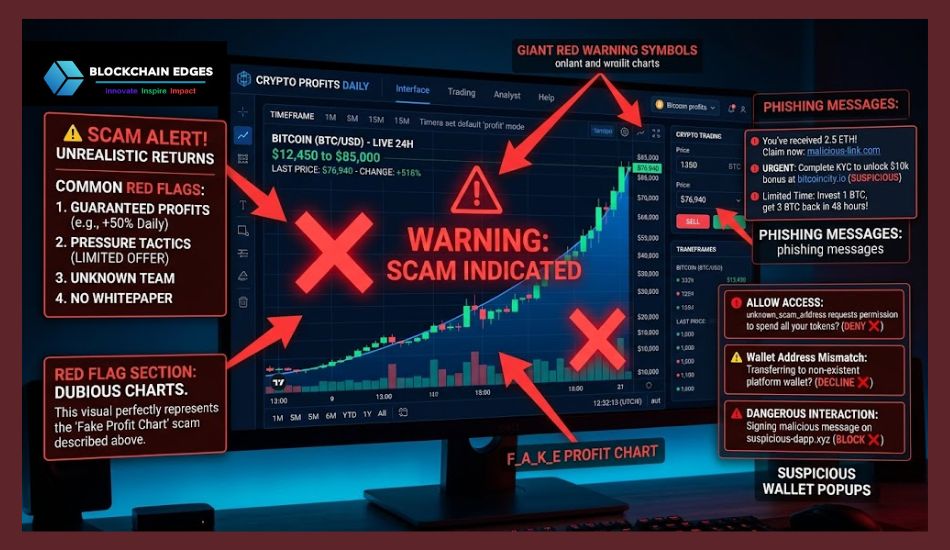
Before we go through the red flags, it helps to understand why these scams are effective in the first place.
Crypto is new to most people. When something is unfamiliar, you do not have a strong internal reference point for what is normal versus what is wrong. Scammers exploit that gap.
They also exploit speed. Crypto operates across borders. A scam launched in one country can reach victims worldwide within hours. And unlike banks, which can reverse fraudulent payments, blockchain transactions usually cannot be reversed. Once you send crypto to a scammer’s wallet, it is gone.
Add to this the fact that in 2026, you can expect more AI deepfakes, cloned apps, and cross-chain trap scams to be more convincing and harder to spot than they were even two years ago.
How To Avoid Crypto Scams. But here is the thing. The tools change. The psychological tricks do not. Once you know the patterns, the disguises stop working.
10 Crypto Scam Red Flags That Could Save You Thousands
How to avoid crypto scams with these 10 warning signs every beginner must know. Protect your wallet, avoid fake platforms, and stay safe in crypto.
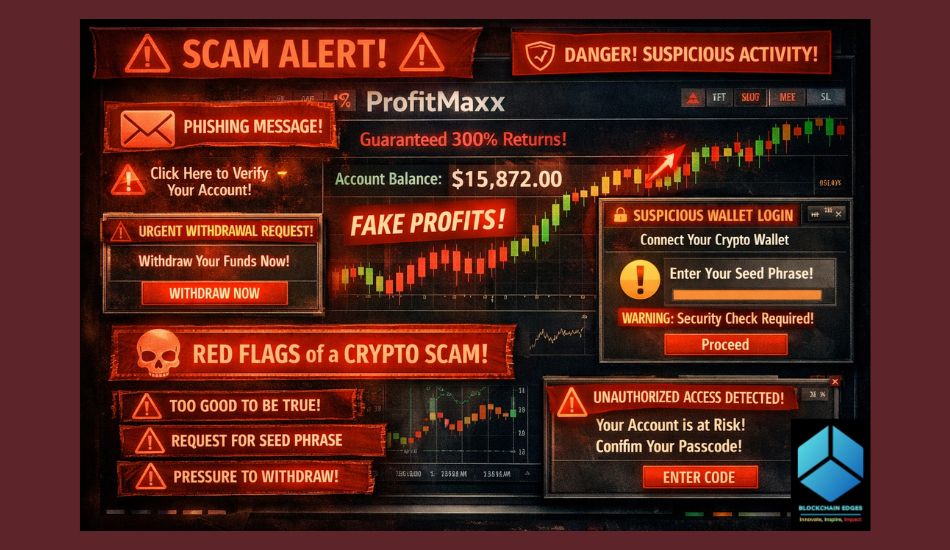
Red Flag 1: Guaranteed Returns
This is the single most reliable indicator that something is a scam.
No authorized investment in any market, anywhere in the world, can guarantee returns. The crypto market is especially volatile. Bitcoin regularly moves 10–20% in a single week. Professional fund managers with decades of experience cannot guarantee profit in this environment.
So when a platform or person tells you that your money will grow 2% per day, 15% per month, or “at least 40% in 90 days,” that is not an investment; that is a lie told to separate you from your money.
Any platform or person promising fixed, risk-free returns is either lying or running a Ponzi structure. This is the single most reliable indicator of fraud.
The structure underneath these promises is almost always the same. Early investors are paid using money from new investors. This creates the illusion of returns until the operator disappears with everyone’s funds (an exit scam), or until a new investment slows down and the whole structure collapses.
The rule: If anyone promises you guaranteed profits in crypto, close the tab. Do not ask questions. Do not “invest just a little to test it.” Close the tab.
Red Flag 2: Pressure to Act Fast
Urgency is a weapon. Scammers use it because it works.
“This offer closes in 3 hours.” “Only 10 spots left in our VIP group.” “If you don’t deposit before midnight, the bonus disappears.” “Act now before the price jumps.”
These phrases are designed to stop you from thinking clearly, doing research, or talking to someone you trust. Every second they can keep you focused on the clock is a second you are not verifying whether the platform is real.
Scammers create time pressure to prevent independent verification. Legitimate opportunities do not disappear because you took a day to think about them.
Any real investment opportunity, a regulated exchange, a verified staking platform, or a legitimate token launch will still exist tomorrow. And the day after. If the person contacting you needs an answer in the next hour, that tells you everything you need to know about them.
The rule: Real opportunities wait. If you feel rushed, slow down intentionally. That feeling of urgency is the scam doing its job on your brain.
Red Flag 3: Anyone Asks for Your Seed Phrase
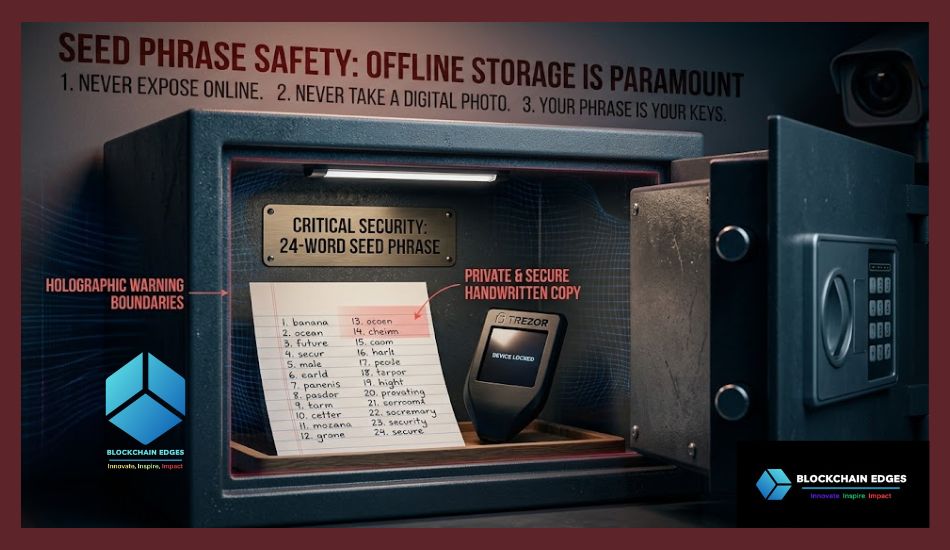
Your seed phrase, sometimes called a recovery phrase or mnemonic, is a sequence of 12 to 24 words that controls your entire crypto wallet.
Whoever knows your seed phrase controls everything in that wallet. Full access. Immediate. Irreversible.
No recognized service, exchange, or support team will ever request your seed phrase. This is the single most common method scammers use to steal crypto. Your seed phrase is the master key to your wallet; anyone who has it can drain all your funds instantly and irreversibly.
This applies to everyone. Customer support agents. Official-looking email senders. “Blockchain validators” on Telegram. Wallet “verification” websites. People offering to help you fix a stuck transaction. None of them, under any legitimate circumstance, will ever need your seed phrase to help you.
The moment anyone asks for it, the conversation is over. Do not give partial phrases. Do not type them into any website. Do not screenshot them and send them anywhere.
If you have already shared your seed phrase, transfer any remaining funds to a completely new wallet immediately. Speed matters at that point.
The rule: Write your seed phrase down on paper. Store it somewhere physical. Never type it into any website, app, or message. Ever.
Red Flag 4: Anonymous or Unverifiable Team
A legitimate project, especially one asking for your money, should have real, verifiable people behind it.
That means names you can search. LinkedIn profiles that existed before the project launched. Social media accounts with a history. Professional backgrounds that check out. Public appearances at industry events.
AI-generated headshots, pseudonymous founders with no prior track record, and teams with no public presence are all red flags.
Some scammers go further and create entirely fake biographies, complete with invented academic credentials and fabricated work histories. A few minutes of verification can often expose this. Search the founder’s name alongside “crypto” and “scam.”
Look up their LinkedIn and check when the account was created. Reverse-image-search their profile photo.
It is worth noting that privacy and anonymity are genuinely valued in some parts of the crypto world. The Bitcoin creator, Satoshi Nakamoto, remains anonymous to this day.
But there is a difference between a long-standing protocol with a transparent codebase and a brand-new investment platform run by people whose faces appear to be generated by AI.
The rule: Before putting money into any platform or token, search the team members independently. If you cannot verify that real humans are behind it, treat it as high risk.
Red Flag 5: The Platform Appeared From Nowhere
Scam platforms are designed to look legitimate at first glance. They have professional logos, SSL certificates, live chat support, and polished dashboards showing your “portfolio balance.”
What they do not have is history.
Check the domain registration date. A website registered three months ago that is already offering institutional-grade investment products is a warning sign. Use a tool like WHOIS to look up when any domain was registered.
Also, look for reviews outside of the platform itself. Not reviews on the site’s own testimonials page, those are fake. Search the platform name on Reddit, Trustpilot, and Google with terms like “withdrawal problem” or “scam” added. Look at what real users are saying across multiple independent sources.
Check if the platform or company is registered with the relevant financial authorities. Lack of regulatory registration or vague details about the legal entity are serious warning signs.
In the US, legitimate investment platforms register with the SEC or CFTC. Exchanges operating with US users should be registered with FinCEN. Unregulated platforms claiming to offer investment services to US residents are operating illegally, which means they have nothing to lose when they take your money.
The rule: If you cannot find a verifiable history of the platform on independent sites, and you cannot confirm it is registered with any financial regulator, do not send money to it.
Red Flag 6: Too-Good-To-Be-True Referral Bonuses
“Invite three friends and earn 30% of everything they invest. Forever.”
Multi-level referral structures are a defining feature of Ponzi and pyramid schemes. They are designed to make existing victims into recruiters, which is why the people who spread them are often genuine believers who have been deceived themselves.
Legitimate platforms offer referral bonuses. Coinbase gives you both a cash bonus when a friend makes their first trade. Binance gives affiliates a share of trading fees. These are single-level, transparent, and proportionate.
What you are watching for is a structure that rewards you based on what other people invest, not on transactions or real platform activity. When a platform’s main product is recruiting new investors rather than delivering an actual service, it is a pyramid scheme wearing a crypto costume.
How To Avoid Crypto Scams: Follow the rule: Referral programs that pay you based on how much your referrals invest (rather than their trading activity) are structurally identical to illegal pyramid schemes. Avoid them entirely.

Red Flag 7: Romance That Turns Into Investing
This is the scam responsible for the largest single-category losses in crypto.
Pig butchering scams have exploded in 2025, typically beginning with a seemingly innocent online encounter, often on dating apps or social media, where scammers pose as attractive, successful individuals.
They cultivate emotional bonds over weeks or months, sharing fabricated life stories to build rapport. Once trust is secured, the conversation shifts to cryptocurrency, promising insider tips on lucrative trades.
Victims are directed to bogus trading platforms that display illusory profits, encouraging larger investments. The account shows consistent gains. The “partner” tells you they use this same platform and have made a fortune. They walk you through depositing more. They suggest bringing in family members.
Then, the moment you try to withdraw, the platform invents a tax hold, a “verification fee,” or an account freeze. Every attempt to get your money out results in a new demand for more money.
Romance or confidence scams totalled $929.3 million in reported losses in 2025 alone, and those are only the cases that were reported to the FBI. Most victims never report it out of shame.
The rule: If someone you met online, regardless of how real the relationship feels, starts steering conversations toward crypto investment opportunities, that is a scam. It does not matter how long you have been talking. It does not matter how much you like them.
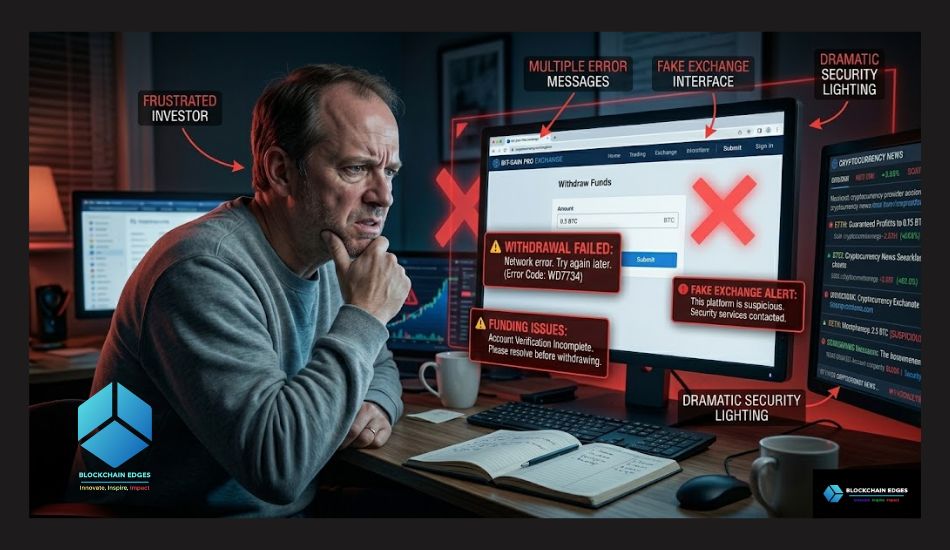
Red Flag 8: You Cannot Withdraw Your Money
This is where many victims finally realise what has happened, but often too late.
Recognized platforms let you withdraw your money. Always How To Avoid Crypto Scams. Without additional conditions. If you put money into Coinbase and decide you want it back, you can initiate a withdrawal immediately. No platform should have the ability to hold your funds indefinitely or require payment to release them.
Scammers create fake trading apps or websites showing fake profits. Users believe they are earning money until they try to withdraw funds, which becomes impossible.
The tactics used to delay withdrawals follow a predictable pattern. First, there is a technical issue. Then there is an account verification requirement. Then there is a tax pre-payment demand. Then there is an “unlock fee.” Each one is designed to extract a little more money while keeping you believing your balance is real and accessible.
Your balance is not real. It never was. The number on the screen was fabricated to keep you invested.
The rule: Before depositing into any platform, test withdrawals first. Send a small amount and immediately try to withdraw it. If there are excuses, delays, or new requirements, do not send more.
Red Flag 9: Fake Celebrity or Brand Endorsement
Elon Musk is not doubling your Bitcoin. Neither is Michael Saylor, Vitalik Buterin, or Warren Buffett.
Fake celebrity endorsements are among the most common and effective scam recruitment tools online. They appear as YouTube videos, social media posts, and even paid advertisements. They look convincing because in 2026, AI deepfakes and cloned platforms make scams more convincing and harder to spot than they were even two years ago.
The structure is almost always the same: a celebrity appears to endorse a platform or a “send 1 BTC, get 2 back” promotion. Real-looking screenshots are shared across social media. Bots flood the comments with fake testimonials.
The same applies to fake brand impersonation. Emails that appear to be from Coinbase, Ledger, or Binance but originate from slightly misspelled domains. Social media accounts that look identical to official channels but have slightly different handles. Support accounts that contact you first rather than waiting for you to reach out.
The rule: No legitimate company runs “send crypto to get more back” promotions. None. If a celebrity appears to be endorsing a giveaway, search the claim independently before clicking anything.
Red Flag 10: Unsolicited Contact Via Telegram, WhatsApp, or DM.
Authorized platforms do not cold-contact strangers about investment opportunities.
If a random account messages you on Telegram, WhatsApp, Twitter, Discord, or Instagram with an offer of a trading tip, an exclusive group, a limited investment, or a job opportunity involving crypto, it is almost certainly a scam.
Red flags repeat: urgent time pressure, crypto-only payment demands, off-domain links, remote-access requests, and unexpected wallet “approve” prompts account for the vast majority of cases.
The message might seem casual at first. Sometimes scammers will pretend it was a wrong number to start a conversation. They build rapport slowly before the financial request comes because they know a sudden pitch gets ignored, but a “friend recommendation” does not.
Fake projects take advantage of closed chat rooms where skepticism gets shut down fast. Anyone asking tough questions inside these circles gets kicked out without delay. If a Telegram group has thousands of members but instantly bans anyone who raises doubts, that group exists to manipulate, not inform.
The Rule: Treat every unsolicited contact about crypto as a scam until proven otherwise. The burden of proof is on them, not on you.

How To Avoid Crypto Scams: What To Do If You Think You Have Found a Scamming Trap?
You have seen a red flag. Or several. Here is exactly what to do.
Step 1: Do not send any more money. Not even a small amount to “verify” anything. Not to unlock your funds. Not because someone says your withdrawal will be processed if you pay a fee.
Step 2: Document everything. Take screenshots of the website, the conversations, any wallet addresses they provided, and any transaction records. Do this before anything disappears.
Step 3: Report it. In the US, file a report at ic3.gov (FBI Internet Crime Complaint Center) and reportfraud.ftc.gov (Federal Trade Commission). Reporting does not guarantee recovery, but it helps law enforcement build cases. The FBI’s Operation Level Up, launched in October 2025, specifically targets crypto fraud schemes.
Step 4: Report the wallet address. If you have a wallet address the scammer used, flag it on blockchain explorers like Etherscan. Scam databases use this information to warn future victims.
Step 5: Do not pay for “recovery services.” Do NOT pay for “recovery services” advertised online; these are almost always secondary scams targeting victims. If someone contacts you claiming they can recover your stolen crypto for a fee, that person is also a scammer.
Only about 10% of stolen cryptocurrency is ever recovered. That is a hard truth. But stopping additional loss and reporting the incident is the right move regardless.
How To Avoid Crypto Scams From Basic Traps?
| Scam Type | Main Danger | Biggest Warning Sign |
| Pig Butchering | Emotional manipulation | Romance + investing |
| Fake Exchange | Withdrawal lock | Cannot cash out |
| Giveaway Scam | Fake celebrity | “Send crypto first.” |

How To Avoid Crypto Scams: Protect Yourself Going Forward?
Knowing the red flags is the first layer. Building the right habits and using the right tools is the second.
1. Use a Hardware Wallet for Your Funds
The single most effective security upgrade you can make is moving your crypto off exchanges and onto a hardware wallet. A hardware wallet stores your private keys offline on a physical device that a scammer’s website can never reach.
Even if you accidentally visit a phishing site, even if your computer is infected with malware, a hardware wallet requires you to physically confirm every transaction on the device itself. No confirmation, no transaction.
The Ledger Nano X works across desktop and mobile and supports thousands of coins. The Ledger Flex has a touchscreen interface that makes confirmation even clearer. Both come with a 30-day return policy and ship to most countries worldwide.
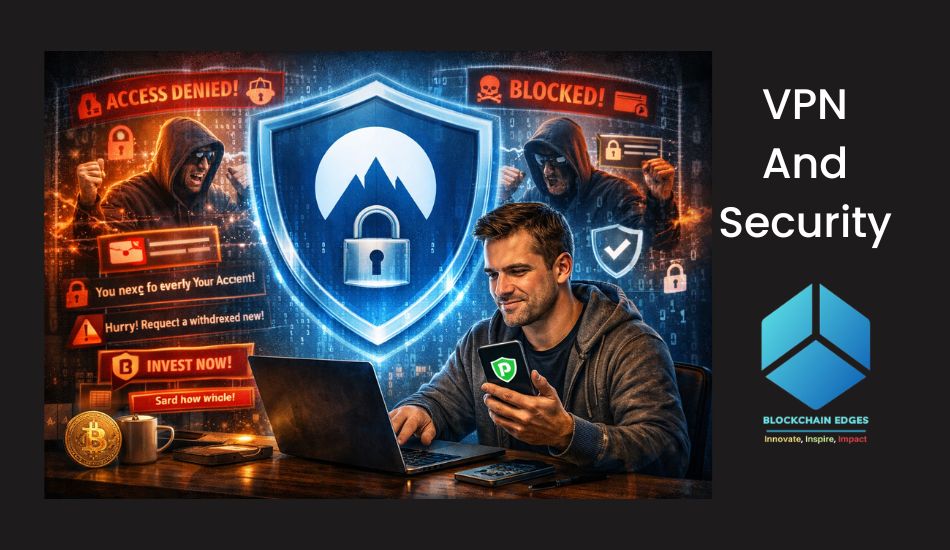
2. Use a VPN When Accessing Crypto Accounts
Your IP address can reveal your location to phishing sites, scammers, and data collectors. When you use public WiFi in a hotel, a coffee shop, or an airport, your connection is exposed.
A VPN encrypts your internet traffic and masks your IP address. This matters especially in countries where certain exchanges are restricted, but it is good practice anywhere.
NordVPN is the one I recommend for crypto users. It has passed independent no-logs audits, accepts crypto payment, works on all major devices, and has a kill switch that cuts your internet if the VPN drops, so your real IP never leaks accidentally.
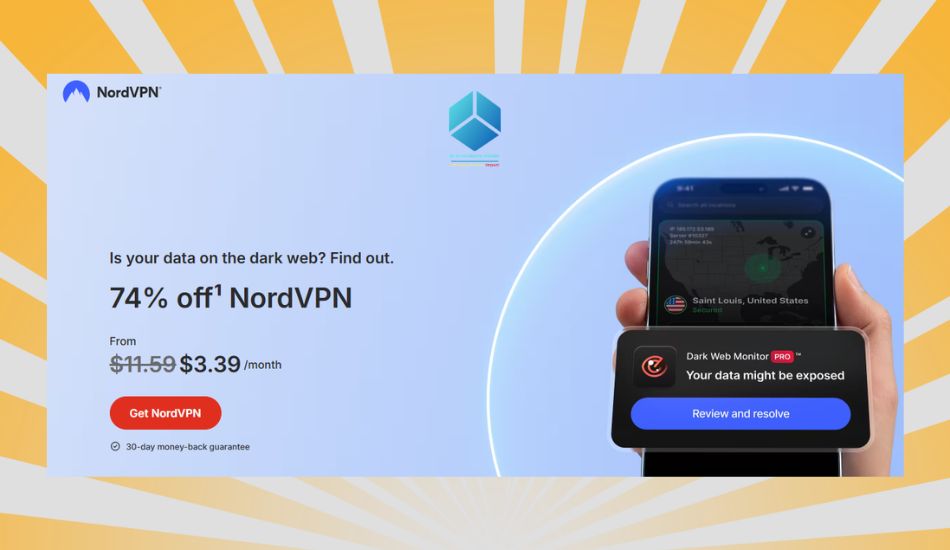
Check NordVPN’s current offer. I earn a commission if you sign up through this link. It does not change the price for you.
3. Only Use Exchanges You Can Verify
For US users: Coinbase, Kraken, and Gemini are registered with FinCEN, insured, and regulated.
For users outside the US: Binance, Bybit, and KuCoin have long operating histories, published security audits, and regulated entities in multiple countries.
Avoid exchanges you found through an unsolicited message, an ad for guaranteed returns, or a link from someone you met online.
4. Enable Two-Factor Authentication (2FA) on Everything
Use an authenticator app, such as Google Authenticator or Authy, rather than SMS for 2FA. SIM-swap attacks, where a scammer convinces your phone carrier to transfer your number to their SIM, are common in crypto. SMS codes can be intercepted. App-based codes cannot.
5. Bookmark Your Exchanges
Type the URL of every exchange and wallet you use directly into your browser, then bookmark it. Do not click links from emails, DMs, or Google ads that claim to be your exchange. The URL will look almost right, but “coinbase-login.com” and “ledger-wallet.net” are not the real sites.

Check PureVPN’s current offer. I earn a commission if you sign up through this link. It does not change the price for you.
This post may contain affiliate links. If you click and purchase, I may earn a small commission at no extra cost to you. I only recommend tools I have personally reviewed and trust.
Conclusion: Crypto Scam Warning Signs Every Beginner Should Know.
Most crypto scams succeed not because people are foolish but because scammers are professional, patient, and skilled at building fake trust.
The ten red flags in this guide cover the overwhelming majority of patterns used in crypto fraud today. guaranteed returns, artificial urgency, seed phrase requests, anonymous teams, unverifiable platforms, pyramid referral structures, romance-to-investment manipulation, withdrawal locks, fake celebrity endorsements, and unsolicited contact.
Knowing these patterns does not make you invincible. It makes you significantly harder to deceive.
Use a hardware wallet. Use a VPN. Stick to regulated exchanges. And any time you feel pressure, excitement, or urgency pushing you to send crypto quickly, pause. That feeling is the scam working on you.
The people who lose money are usually the ones who moved fast. The people who stay safe are the ones who slow down.
“Crypto scams succeed because scammers exploit emotion before logic.” — Alex Rommal, Blockchain Research Writer.
Get more details: What Is Blockchain? Simple 5-Minute Guide for Total Beginners
FAQs: 10 Dangerous Crypto Scams You Must Avoid in 2026.
1. What is the most common crypto scam in 2026?
Pig butchering remains the largest single scam category by revenue, with nearly 40% year-over-year growth in 2024. It involves scammers building a fake romantic or friendship relationship over weeks before introducing a fraudulent investment platform.
2. Can I get my money back if I have been scammed?
In most cases, no. Blockchain transactions are irreversible. Only about 10% of stolen cryptocurrency is ever recovered, and recovery services advertised online are almost always secondary scams. Report to ic3.gov immediately and stop sending money.
3. Is it safe to buy crypto on Coinbase or Binance?
Yes, for reputable centralised exchanges. Coinbase is publicly listed on NASDAQ and registered with FinCEN. Binance operates regulated entities in multiple countries. The risk is not the exchange itself; it is the scammers who create fake websites that look like those exchanges.
4. Can I trust a platform if it has good reviews?
Not always. Fake reviews are easy to generate and purchase. Look for reviews on Reddit, independent forums, and Trustpilot with verified purchase labels. Search the platform name alongside “withdrawal problem” and “scam” to see what real users say when things go wrong.
5. Should I use a VPN for crypto?
It is a good practice, especially on public networks or in countries where exchanges are restricted. A VPN hides your IP and encrypts your traffic. NordVPN is the option I use and recommend for crypto specifically.
6. What do I do if I already gave someone my seed phrase?
Move your funds to a new wallet immediately using a different device. Create a brand new wallet with a brand new seed phrase. Transfer everything there before the scammer acts. Do not delay.
7. Is every anonymous crypto project a scam?
Not automatically. Some authorized protocols have anonymous development teams with long, verifiable histories of open-source code. The concern is specifically new investment platforms with anonymous founders, no audits, and no verifiable track record, asking for your money.
