


 Alex Rommal
 Gas Fees Explained: You finally decide to send some crypto. Maybe it’s your first time. You open your wallet, type in the amount, hit send… and then a strange number pops up. “Gas fee: $4.82.” Or worse, on a busy day, “$38.00.”
You stare at the screen. You didn’t ask for this. Nobody told you about it. And now you’re wondering: did I just get charged extra by accident? Is this a scam? Why does sending my own money cost money?
If this has happened to you, you’re not alone. Gas fees are one of the most confusing parts of using crypto for the first time, and almost nobody explains them in plain language. So let’s fix that.
If you have ever tried to send cryptocurrency and noticed an extra charge before clicking “Confirm,” you are not alone. Many beginners open a wallet like MetaMask, try to move ETH, Bitcoin, or tokens, and suddenly see a transaction fee they do not understand.
That extra cost is called a gas fee.
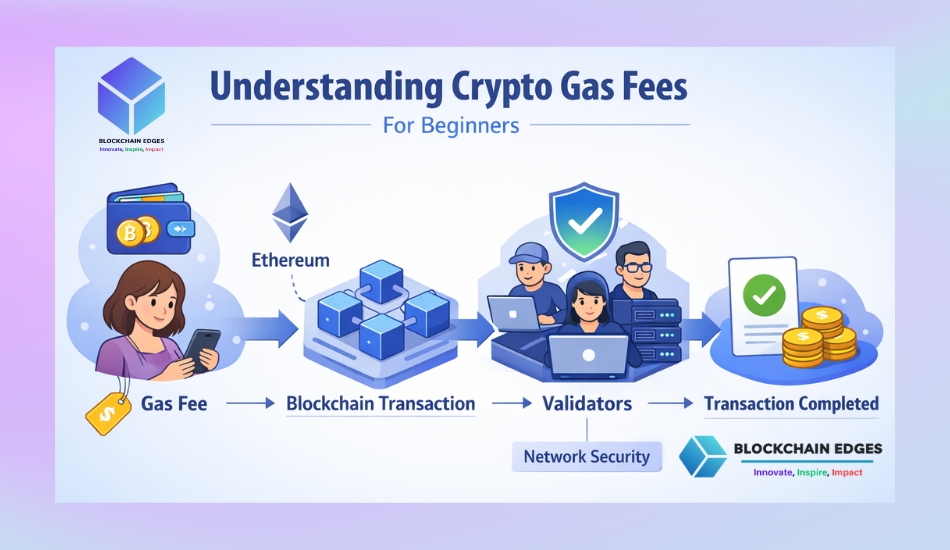
Gas fees are the small payments required to process a blockchain transaction. They help validators and miners verify transactions, secure the network, and keep blockchain systems such as Ethereum running smoothly.
Whether you are sending crypto, using a smart contract, trading on a decentralized application (DApp), or exploring Web3 and DeFi platforms, gas fees are part of the process.
The confusing part is that gas fees can change from minute to minute. During periods of heavy network congestion and high demand, Ethereum fees can rise quickly.
Terms such as Gwei, gas price, gas limit, Layer 2 networks, Arbitrum, Optimism, Polygon, and the Ethereum Virtual Machine (EVM) can make the topic feel even more complicated for new users.
The gas fees are much easier to understand than they seem. You’ll know exactly what gas fees are, why they exist, why they go up and down, and how to avoid paying more than you need to.
Also, you will learn what gas fees are, why they exist, how they are calculated, why they increase, and practical ways to lower your costs when making cryptocurrency transactions in 2026.
What Are Gas Fees in Simple Words?
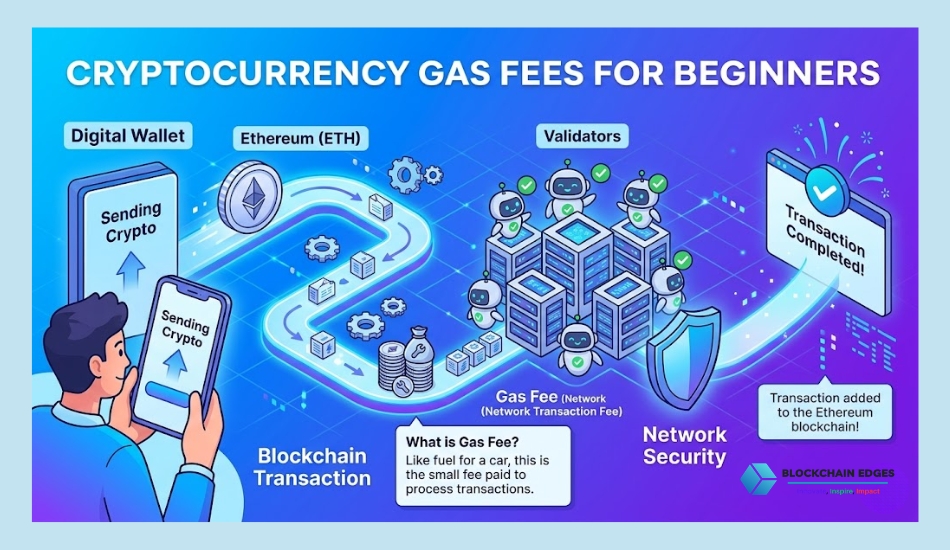
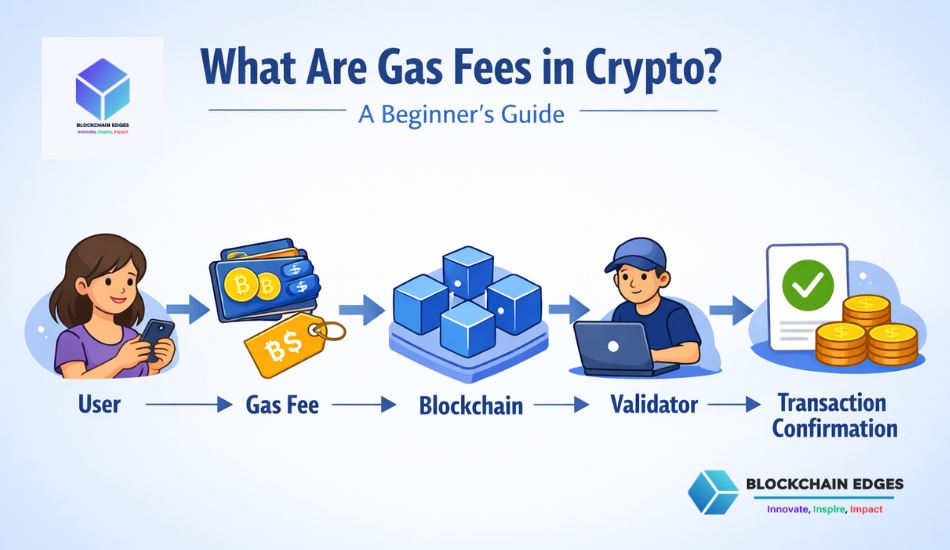
A gas fee is a small payment you make to the blockchain network every time you do something on it, like sending crypto, swapping tokens, or using an app built on blockchain.
A blockchain is a shared computer run by thousands of people around the world. When you send a transaction, you’re asking that giant shared computer to do some work for you. Gas fees pay for that work.
You’re not paying a company. You’re not paying “Blockchain Edges” or your wallet app. You’re paying the network itself, specifically the people (or computers) who check your transaction and add it to the blockchain.
A simple way to remember gas fees explained:
- Gas = the computer work needed to process your transaction
- Gas fee = the price you pay for that work
No work, no transaction. That’s why gas fees exist on almost every blockchain, including Ethereum, and even low-fee networks like Solana.
Why Do Gas Fees Exist At All?
This is the part most guides skip, and gas fees explained are actually the key to understanding everything else.
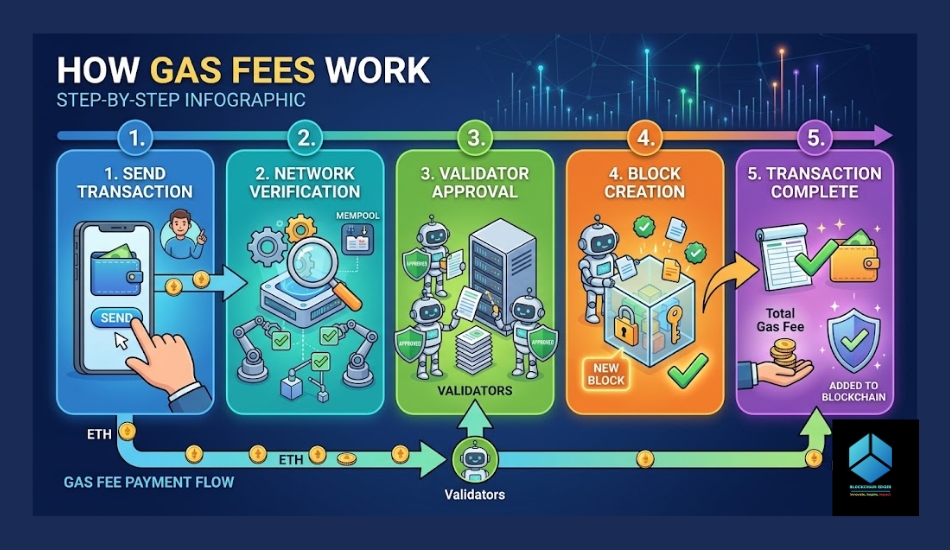
Blockchains have limited space. Every few seconds, a new “block” of transactions gets added to the chain, and that block can only hold so much data.
If a thousand people all try to send transactions at the same time, but the block only has room for 200, someone has to decide which 200 go first.
Gas fees solve this problem in three ways:
- They prioritize transactions: If you’re willing to pay more, your transaction usually gets processed faster.
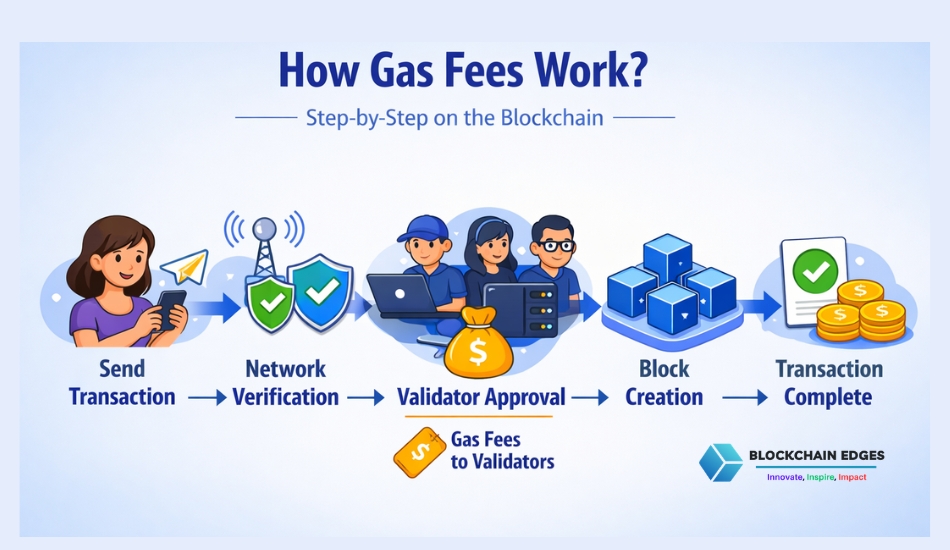
- They pay the people securing the network: Validators (the people running the computers that confirm transactions) get rewarded for their work.
- Gas Fees Explained And Stop Spam: Without a fee, someone could flood the network with millions of fake transactions for free and break the whole system.
So gas fees explained isn’t a “tax” someone invented to take your money. They’re how a network with no central boss still manages to stay fair, fast, and secure.
How Are Gas Fees Calculated?
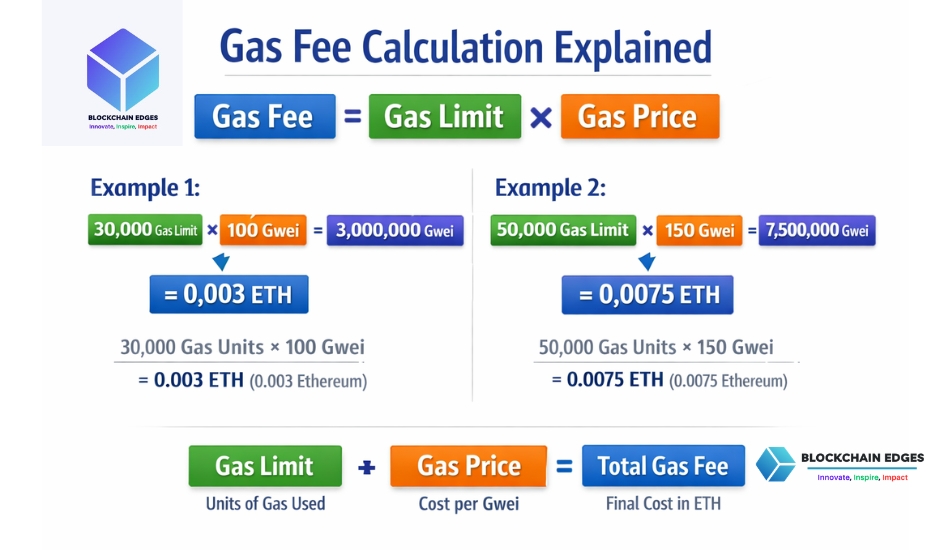
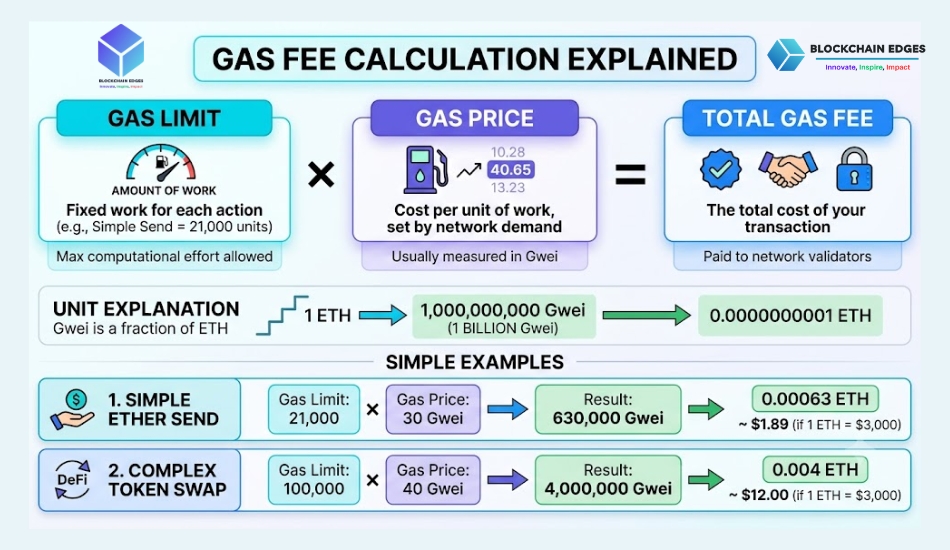
Gas Fees Explained: On Ethereum, the fee you pay comes down to a simple formula: Total Fee = Gas Units Used × Gas Price.
Here’s what each part means in plain English:
- Gas units: how much “work” your transaction needs. A simple transfer (sending ETH from one wallet to another) usually needs around 21,000 gas units. A more complex action, like swapping tokens on a DeFi app or minting an NFT, can need 100,000–300,000+ units because it involves more steps.
- Gas price: how much you’re paying per unit of work, measured in a tiny unit called gwei (1 gwei = 0.000000001 ETH). This price changes constantly based on how busy the network is.
Since the London upgrade in 2021, Ethereum’s gas price has two parts: a base fee and an optional priority fee (often called a “tip”).
The base fee is set automatically by the network depending on how full the last block was, and it’s burned, meaning it’s permanently removed from circulation, not paid to anyone. The priority fee is a small tip you can add to encourage validators to process your transaction faster.
So if your wallet shows “estimated gas fee,” it’s really doing this math for you in the background.
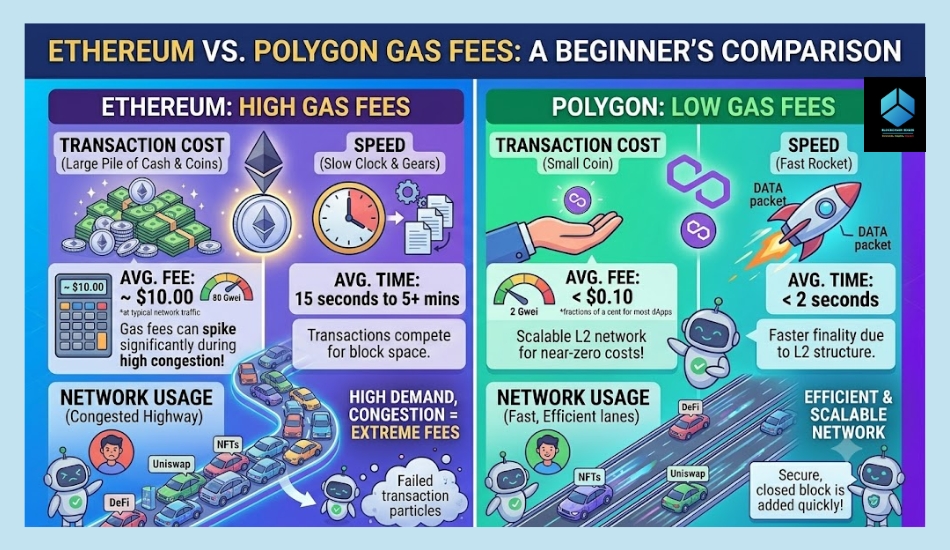
Gas Fees on Different Blockchains Compared
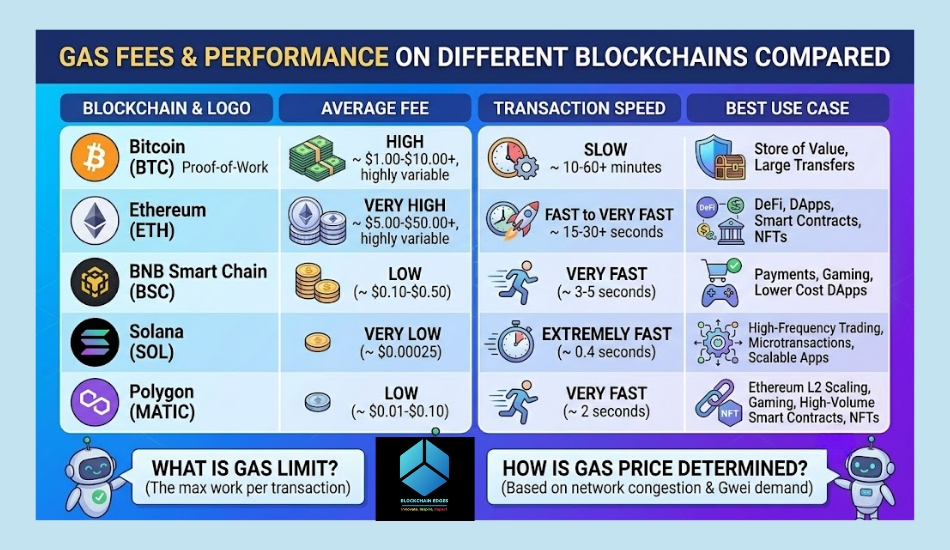
Not all blockchains charge the same transaction fees. Some networks focus on security and decentralization, while others are designed to keep costs low and process transactions faster.
Gas fees explained below give you a simple overview of how gas fees compare across popular blockchain networks.
| Blockchain | Typical Fee Range* | Transaction Speed | Best For | Notes |
| Ethereum | $1–$50+ | Minutes | Smart Contracts, DeFi, NFTs | Fees can rise significantly during network congestion. |
| Bitcoin | $0.50–$20+ | 10–60 Minutes | Sending and Receiving Bitcoin | Fees depend on network demand and transaction size. |
| Solana | Less than $0.01 | Seconds | Fast Payments, Web3 Apps | Known for very low fees and high transaction speed. |
| BNB Smart Chain (BSC) | $0.05–$1 | Seconds | DeFi, Token Swaps | Lower fees than Ethereum with broad ecosystem support. |
| Polygon | Less than $0.01 | Seconds | Everyday Transactions, Gaming, NFTs | One of the cheapest networks in the Ethereum ecosystem. |
*Actual fees change based on network activity, demand, and market conditions.
1. Ethereum Gas Fees
Ethereum is the most popular blockchain for smart contracts, decentralized applications (DApps), NFTs, and DeFi platforms. Because millions of users compete for block space, gas fees can become expensive during busy periods. Ethereum gas fees explained is why many users look for Layer 2 solutions such as Arbitrum and Optimism.
2. Bitcoin Transaction Fees
Bitcoin does not use “gas” in the same way Ethereum does. Instead, users pay a transaction fee to encourage miners to include their transaction in the next block. Fees usually increase when the Bitcoin network becomes crowded.
3. Solana Transaction Fees
Solana is known for its high-speed network and extremely low fees. Most transactions cost only a fraction of a cent, making them attractive to users who want fast, affordable transfers.
4. BNB Smart Chain Fees
BNB Smart Chain offers lower transaction costs than Ethereum while supporting smart contracts and decentralized applications. This makes it a popular choice for users who want lower fees without giving up blockchain functionality.
5. Polygon Transaction Fees
Polygon is a Layer 2 scaling solution connected to the Ethereum ecosystem. It provides very low transaction fees and fast confirmation times, making it a favorite option for gaming, NFT projects, and everyday crypto transactions.
Key Takeaway
If your main goal is saving money, Polygon, Solana, and BNB Smart Chain are usually the most affordable options. If you need access to the largest DeFi and smart contract ecosystem, Ethereum remains the leader, though it often incurs higher gas fees.
Why Do Gas Fees Go Up and Down So Much?
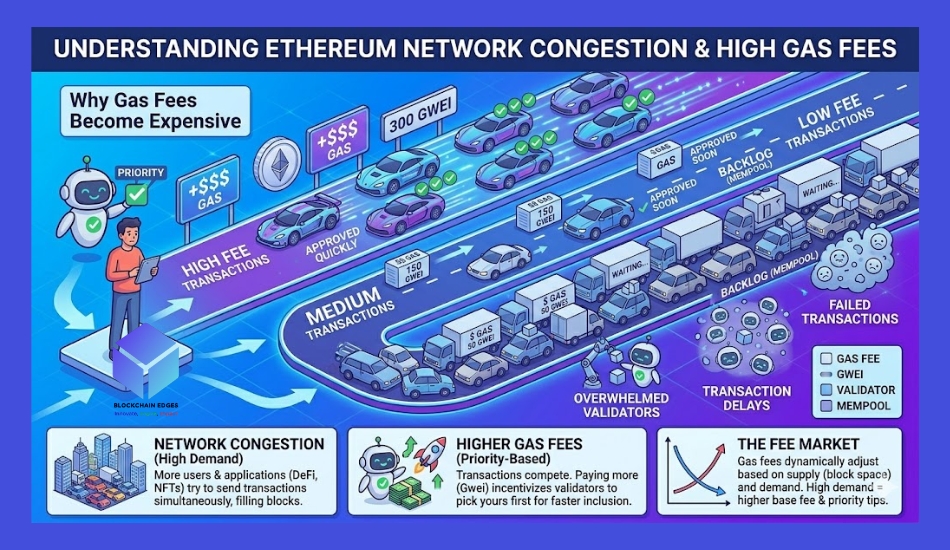
This is the part that confuses beginners the most. You might pay $0.50 one day and $30 the next for the same type of transaction. Here’s why.
1. Network Demand (The Biggest Factor)
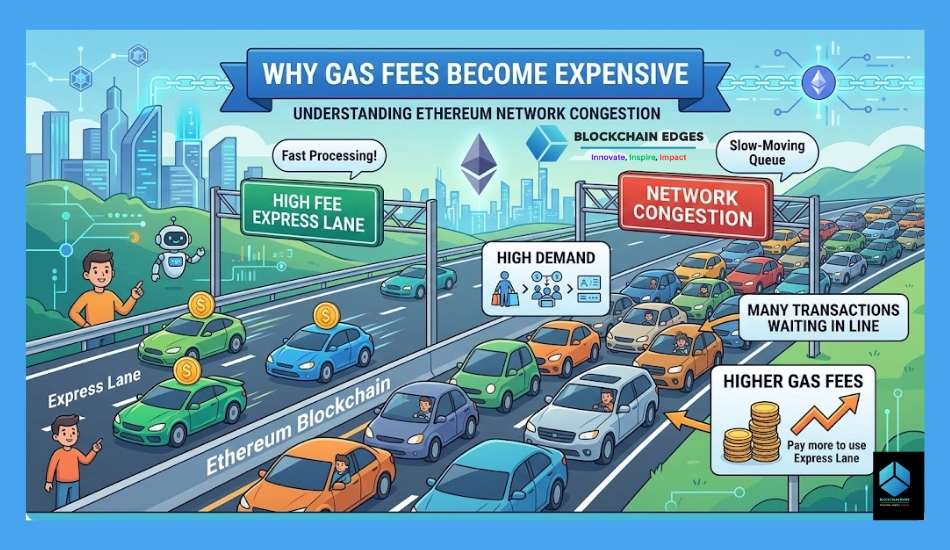
Think of the blockchain like a highway with a fixed number of lanes. At 3 AM, traffic flows freely. At 5 PM on a weekday, everyone is trying to get home at once, and the same road suddenly feels twenty times more crowded.
Blockchains work the same way. When lots of people are trading, minting NFTs, or using DeFi apps at the same time, more people are competing for the same limited block space, and gas prices rise to match that demand.
2. Transaction Complexity
A simple “send crypto to a friend” transaction is cheap because it requires very little computer work. But things like swapping tokens, staking, or interacting with a smart contract require the network to run more code, which uses more gas units and costs more, even if the network isn’t busy.
3. The Blockchain You’re Using
Not all blockchains charge the same. Solana fees are typically fractions of a cent, around $0.00025 per transaction, which makes it practical for frequent trading and small transactions. Ethereum’s mainnet fees, on the other hand, can swing from under a cent to tens of dollars depending on congestion.
4. Time of Day and Week
Ethereum gas tends to be lowest during weekends and early morning hours UTC, roughly between 2 AM and 8 AM, when fewer people around the world are actively using the network.
A Quick Real-World Example 2026 Beginner’s Guide: What Are Gas Fees in Crypto and Why Do You Have to Pay Them?
Let’s say you want to swap one token for another on a decentralized exchange.
Your wallet might show something like this:
| Item | Example Value |
| Gas units needed | 150,000 |
| Base fee | 5 gwei |
| Priority fee (tip) | 1 gwei |
| Total gas price | 6 gwei |
| Total fee | 150,000 × 6 gwei = 900,000 gwei ≈ 0.0009 ETH |
If ETH is worth $3,000, that transaction would cost you roughly $2.70 in gas on top of whatever you’re swapping.
Now imagine the network is congested and the base fee jumps to 50 gwei. That same transaction could suddenly cost $22.50 instead. Same swap, same wallet, same day, a much busier network.
This is exactly why your gas fee can feel unpredictable. It’s not your wallet being unfair. It’s the network’s traffic conditions changing in real time.
Do You Always Have to Pay Gas Fees?
Not in every situation. Here’s a quick breakdown:
- Buying crypto on an exchange (like Coinbase or Binance): You usually don’t pay blockchain gas fees directly, because the trade happens inside the exchange’s own system, not on the blockchain itself. You only pay gas when you withdraw your crypto to your own self-custody wallet.
- Sending crypto from your own wallet: Yes, you’ll pay gas, because this is a real on-chain transaction.
- Using DeFi apps, minting NFTs, or interacting with smart contracts: Yes, and these usually cost more gas than a simple transfer because they’re more complex.
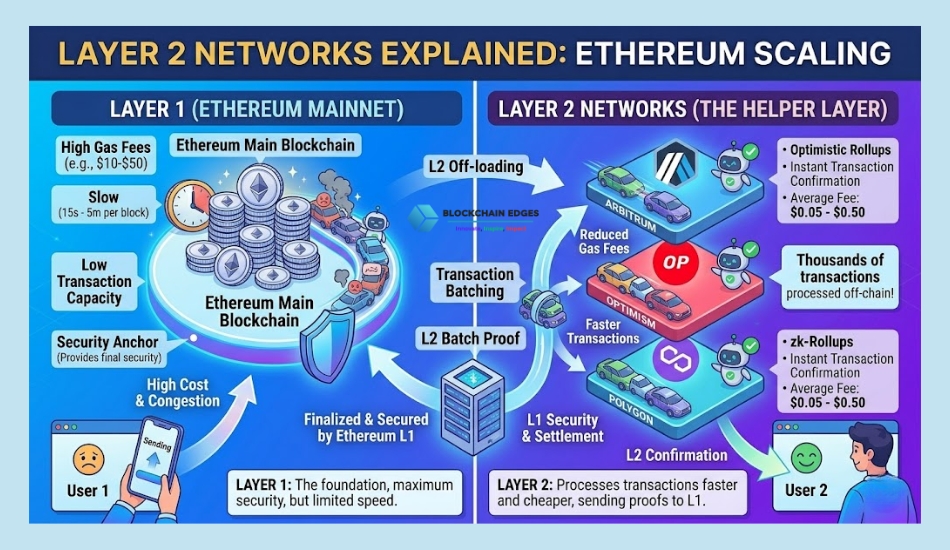
- Using Layer 2 networks (like Arbitrum, Optimism, or Base): You still pay a small fee, but it’s usually a tiny fraction of what you’d pay on Ethereum’s main network.
The Good News: Gas Fees Have Gotten Much Cheaper in 2026
If you tried crypto a couple of years ago and got scared off by a $50 fee, here’s some encouraging news: things have changed a lot.
Basic Ethereum transfer fees dropped to roughly $0.01 in January 2026, even during record-high network usage. A big reason for this shift is that Layer 2 networks now handle about 95% of Ethereum’s total transaction activity, moving most everyday activity off the expensive main network and onto cheaper, faster chains that still settle back to Ethereum for security.
In short: the “gas fee panic” that scared off so many beginners in the past is becoming less common, especially if you know which network to use.
How to Pay Less in Gas Fees Without Doing Anything Risky?
You don’t need to be a developer to lower your gas costs. Here are simple, safe habits:
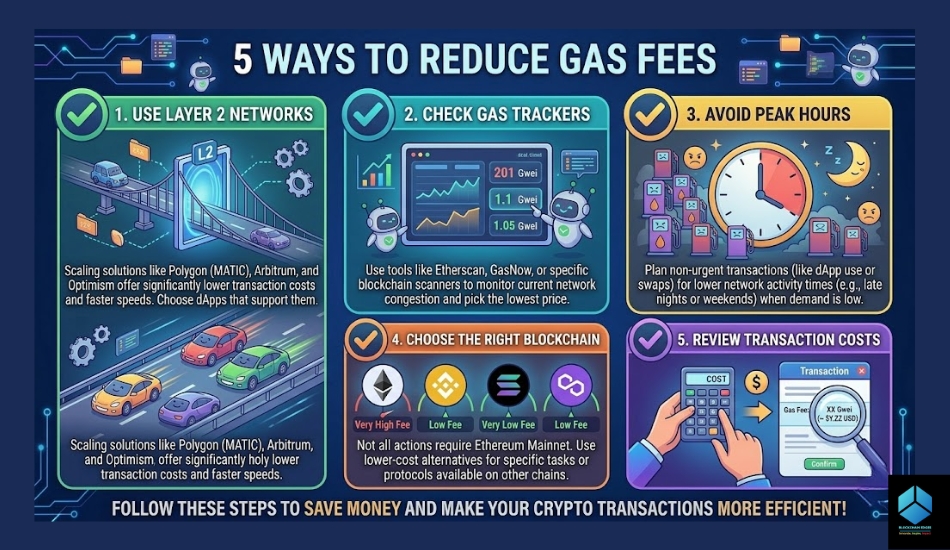
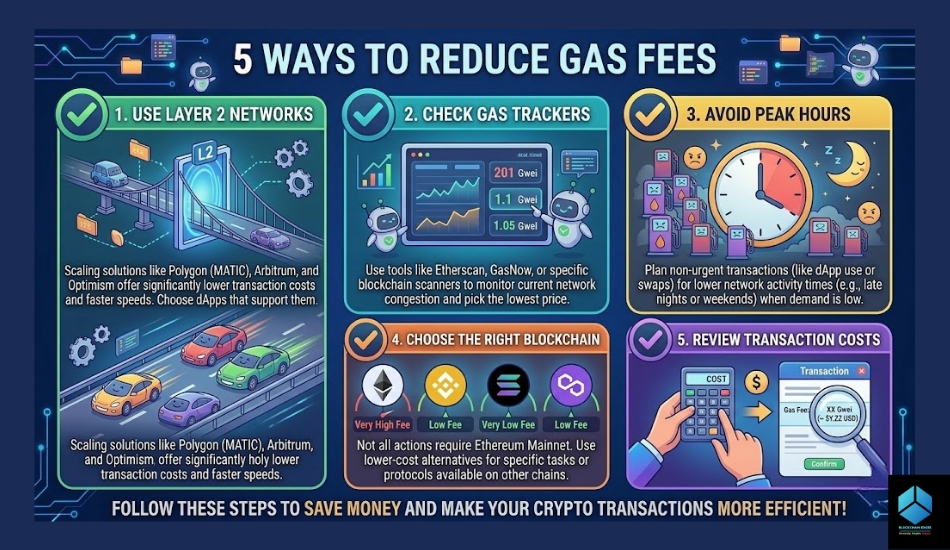
1. Use a gas tracker before sending a transaction: Free tools let you see current gas prices before you confirm anything, so you’re never surprised.
2. Time your transactions: If something isn’t urgent, sending it during off-peak hours typically weekends or early mornings can mean significantly lower fees.
3. Use Layer 2 networks when possible: Many wallets and apps now let you choose a Layer 2 network instead of Ethereum’s main chain, which can mean paying a small fraction of the cost for the same action.
4. Avoid sending during major NFT drops or big market moves: These events flood the network with transactions and spike gas prices for everyone, even people doing simple transfers.
5. Double-check before confirming: Most wallets show you the estimated fee before you confirm. Take a second to look at it if it seems unusually high, and you can often wait and try again later when the network is calmer.
Common Gas Fee Myths And the Truth
- Myth: “Gas fees go to my wallet app.” Truth: Your wallet (like MetaMask or Trust Wallet) doesn’t keep your gas fee. It goes to the network either burned (base fee) or paid to validators (priority fee).
- Myth: “If I see a high gas fee, something is wrong, or I’m being scammed.” Truth: High gas fees usually just mean the network is busy. It’s frustrating, but it’s normal, not a sign of fraud. That said, always double-check the destination address of your transaction; that’s where scams actually happen, not in the gas fee itself.
- Myth: “Gas fees are the same on every blockchain.” Truth: They vary enormously. Ethereum’s mainnet fees can be much higher than Solana or Layer 2 networks for the same type of transaction.
Common Gas Fee Mistakes Beginners Make
When you first start using cryptocurrency, gas fees can feel confusing. Many beginners lose money simply because they do not understand how blockchain transaction fees work.
The good news is that most gas fee mistakes are easy to avoid once you know what to look for.
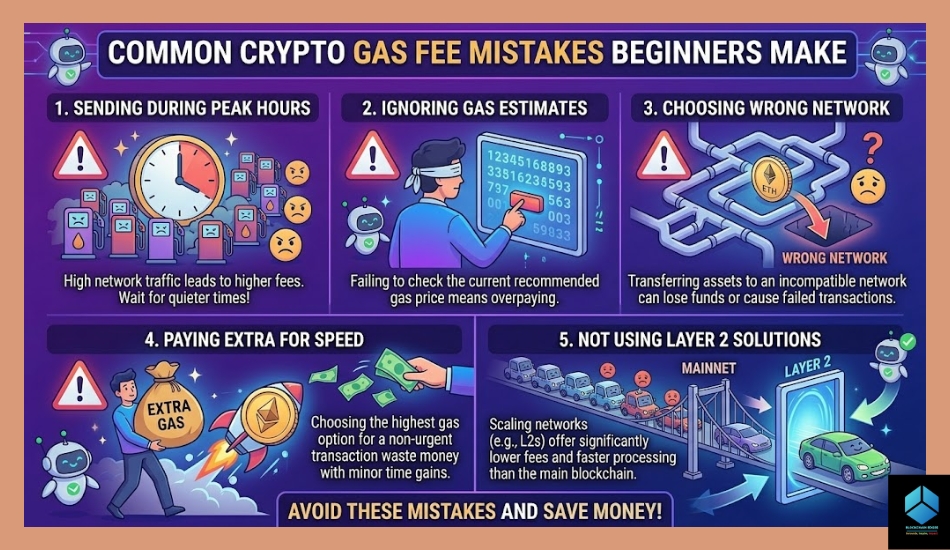
1. Sending Transactions During Peak Demand
One of the most common mistakes is sending a transaction when the network is very busy.
On networks like Ethereum, gas fees rise when many users are trying to make transactions at the same time. This is called network congestion. During busy periods, you may pay much more than necessary for the same transaction.
Before sending crypto, check current gas fees. If possible, wait until network activity drops.
2. Ignoring Gas Fee Estimates
Many wallets, including MetaMask, show an estimated gas fee before you confirm a transaction.
Some beginners rush through this screen and click “Confirm” without checking the cost. Later, they are surprised when they see how much ETH was spent on fees.
Always take a few seconds to review the estimated gas fee before completing a transaction.
3. Using the Wrong Blockchain Network
Not all blockchains have the same transaction costs.
For example, sending tokens on Ethereum can cost much more than sending similar assets on Polygon, Arbitrum, or Optimism. Beginners often choose a network without comparing fees first.
Understanding which blockchain you are using can save a significant amount of money over time.
4. Paying More Than Necessary for Speed
Many wallets allow you to choose a transaction speed such as Slow, Standard, or Fast.
Some users always select the fastest option because they think it is required. In reality, many transactions do not need priority processing.
Choosing a standard speed can often reduce your gas costs while still completing the transaction successfully.
5. Not Understanding Smart Contract Costs
A simple token transfer usually costs less than interacting with a smart contract.
Activities such as token swaps, NFT purchases, staking, and DeFi transactions require more blockchain resources. Because of this, they often have higher gas fees.
Before using a decentralized application (DApp), make sure you understand that smart contract actions can cost more than basic transfers.
6. Failing to Check Layer 2 Alternatives
Many beginners stay on the Ethereum main network without exploring cheaper options.
Layer 2 networks such as Arbitrum, Optimism, and Polygon were created to reduce transaction costs while keeping access to the Ethereum ecosystem.
In many cases, these networks offer the same experience with much lower gas fees.
7. Panicking When a Transaction Fee Changes
Gas fees are not fixed. They change based on network demand.
Some beginners see a fee increase and think something is wrong with their wallet or cryptocurrency. In most cases, the network is simply experiencing higher activity.
Understanding that gas fees change in real time helps you make better decisions and avoid unnecessary stress.
Quick Tip for Beginners: Understanding Gas Fees Explained Guide to Ethereum and Blockchain Costs.
Before sending any crypto transaction, remember these three simple steps:
- Check the current gas fee.
- Confirm you are using the correct network.
- Compare Layer 2 options if available.
Following these basic steps can help you avoid the most common mistakes and save money on blockchain transactions.
The Bottom Line: What Are Gas Fees Explained in Crypto? Why It Matters and How to Save Money.
Gas fees can feel like a confusing extra cost when you’re new to crypto, but they’re really just the price of using a shared, secure network with no central company in charge.
Once you understand that gas pays for computer work, changes based on demand, and varies by blockchain, those numbers on your screen stop feeling like a mystery and start feeling like something you can plan around.
The next time your wallet shows a gas fee, you’ll know exactly what gas fees explained means, why it’s that amount, and what you can do if you want to pay less.
Informative article: How to Avoid Crypto Scams: 10 Red Flags Every Beginner Must Know.
FAQs: What Are Gas Fees? A Simple Crypto Guide for Beginners 2026.
1. What does “gas” mean in crypto?
Gas is the unit that measures how much computational work a transaction requires on a blockchain. The more complex your transaction, the more gas it uses.
2. Why are Ethereum gas fees sometimes so high?
Because Ethereum has limited block space, and when many people try to use the network at once, they compete by offering higher fees to get processed faster.
3. Can I avoid gas fees completely?
Not on most blockchains, for every on-chain action requires some gas. However, you can minimize fees by using Layer 2 networks, timing your transactions, and choosing low-fee blockchains like Solana for everyday use.
4. What happens if I don’t have enough crypto to cover the gas fee?
Your transaction will fail or get stuck. Always keep a small amount of the network’s native token, like ETH for Ethereum, in your wallet to cover gas, separate from the funds you’re sending.
5. Is a higher gas fee always better?
Not necessarily. A higher fee can speed up confirmation during busy periods, but if the network isn’t congested, paying extra doesn’t make your transaction any faster; it just costs you more.
